Summary — all ten run with no subscription
| # | Bike | Price now | Owner reviews | TV / screen | Optional sub | Rider height | Fits 4'11"? | Best for |
|---|---|---|---|---|---|---|---|---|
| 1 | Wahoo Kickr Bike Pro wahoofitness.com | $3,199 was $3,999 | Expert top pick; low public review volume | No screen bring your own tablet/TV | SYSTM $17.99/mo | 5'0"–6'4" | No | Maximum road realism |
| 2 | Tacx Neo Bike Plus garmin.com | $3,999 | Well regarded; count not published | 4.5" display dual device holders | Tacx Premium ~$12–16/mo | not published | No — saddle too high | Best training data |
| 3 | Wattbike Atom gen 2 us.wattbike.com | $2,799 list $3,499 | Strong reputation; count not published | No screen tablet holder | Hub+ $7.99/mo (12 mo free) | 5'0"–6'5" | No | Pedal-stroke analysis |
| 4 | Technogym Ride technogym.com | $4,850 | Boutique volume, few public reviews | 22" built-in Netflix, Zwift, Eurosport | Unlimited $29/mo | not published | No — saddle too high | Screen built in, no tablet |
| 5 | Keiser M3i keiser.com | $2,985 | 4.8/5 from ~1,699 — strongest here | No screen tablet tray | The Ride $6.99/mo | 4'10"–7'0" | Yes — best range here | Buy once, never service |
| 6 | Life Fitness IC7 lifefitness.com | $4,367 | Commercial line, little public review data | Console only tablet shelf | ICG app optional | not published | Unverified | Commercial studio build |
| 7 | Wahoo Kickr Bike Shift wahoofitness.com | $2,549 out of stock | Same family as the Pro; sparse data | No screen bring your own | SYSTM $17.99/mo | 5'0"–6'4" | No | Kickr shape, lower price |
| 8 | Concept2 BikeErg concept2.com | $1,100 | Excellent reputation; some defect complaints | PM5 monitor no streaming | None exists | low-seat option | Yes — with low seat | Indestructible, cheapest quality |
| 9 | Zwift Ride us.zwift.com | $999 thru Aug 9 | 4.9/5 from 333 (Zwift) | No screen bring your own | Zwift $19.99/mo — see note | 5'0"–6'6" | No | Cheapest road-feel — with a catch |
| 10 | Schwinn IC4 schwinnfitness.com | ~$999 | Broadly positive; CR rates it "very good" | Backlit LCD tablet tray | None needed | 4'6"–6'6" | Yes | Best budget, no lock-in |
The reviews
Wahoo Kickr Bike Pro — $3,199 (was $3,999) Most realistic
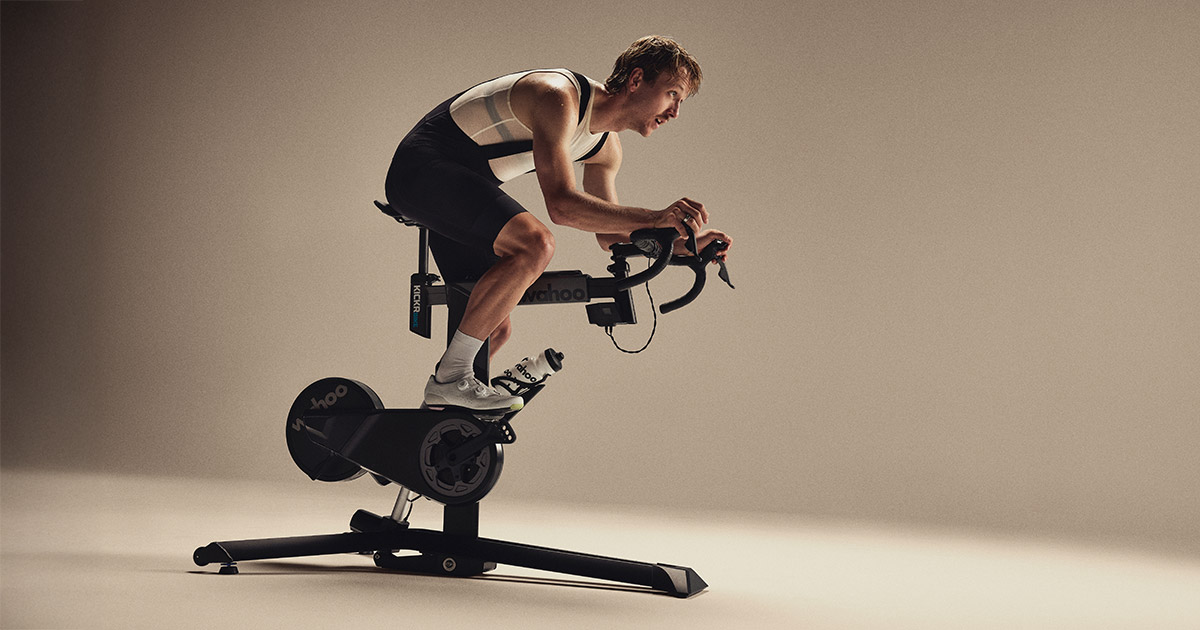
The realism benchmark. The whole frame physically tilts +20% on climbs and −15% on descents, so a climb genuinely shifts your weight the way a road does. Real brake-hood shifters with fully customizable virtual gearing, ±1% power accuracy, and five fit adjustment points (stack, reach, setback, saddle height, frame height) with crank lengths from 165 to 175 mm.
No subscription required. Resistance, tilt and shifting are all standalone, and it broadcasts power and cadence over Bluetooth and ANT+ to any app free. Wahoo's own SYSTM library is $17.99/mo if you want it — and only if.
Corrections from the last revision: the rider range is 5'0"–6'4", not 6'6" as I wrote. Max rider weight 250 lb. And it is currently on sale at $3,199.99, down from the $3,999.99 MSRP I quoted.
Tacx Neo Bike Plus (Garmin) — $3,999 Best training tool
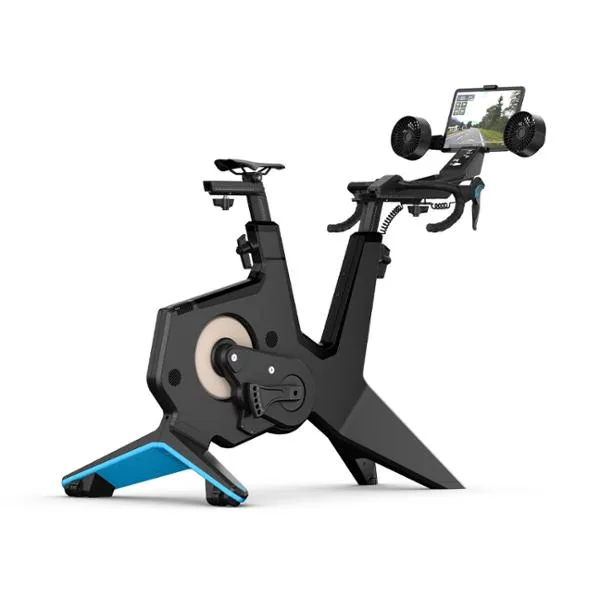
The better training machine. Best-in-class ERG feel, up to 2,200 watts, gradients replicated to 25% as resistance, no calibration ever, built-in fans that ramp with effort, a 4.5" display, two USB chargers and five crank lengths from 165 mm.
No subscription required — full resistance and free power/cadence broadcast to any app. Tacx Premium (video routes, group rides) is optional.
Two corrections: the price is $3,999.99 across US retailers — my "~$3,199 street" figure was wrong, that was the Wahoo's sale price. And "self-powered" needs a caveat: pedaling powers the electronics and broadcast, but active descent simulation needs mains power.
Wattbike Atom gen 2 — $2,799 (list $3,499) Zero-subscription winner
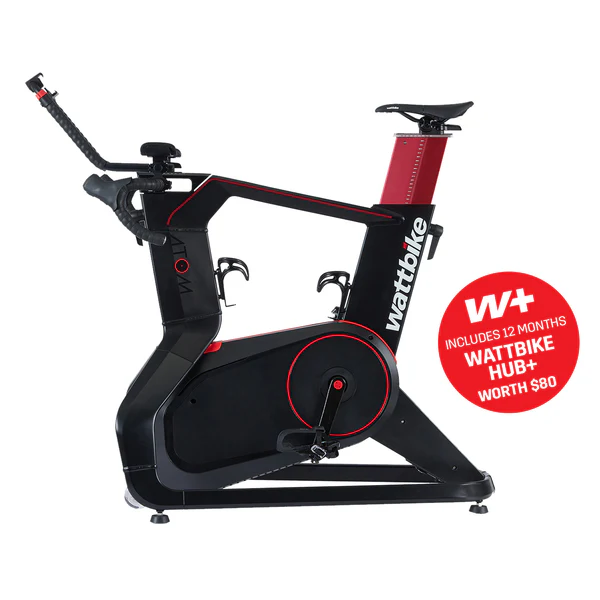
This one climbed three places on your no-subscription rule, and it deserves to. Its signature feature is Polar View — real-time pedal-stroke analysis showing exactly where in the rotation you produce power and how balanced left/right you are. Nothing else here does that. ±1% accuracy, virtual gearing, Ergo mode, near-silent.
The free Wattbike Hub app is unusually generous — 100+ workouts, FTP tests and full metrics at no cost, plus free ANT+/Bluetooth/FTMS broadcast to Zwift, TrainerRoad and the rest. The paid Hub+ tier is $7.99/mo, and 12 months come bundled free with the bike.
Correction: current US price is $2,799 on promotion (list $3,499) — not the flat "~$3,400" I gave. That repositions it as strong value rather than awkwardly priced. Rigid frame, no tilt.
Technogym Ride — $4,850
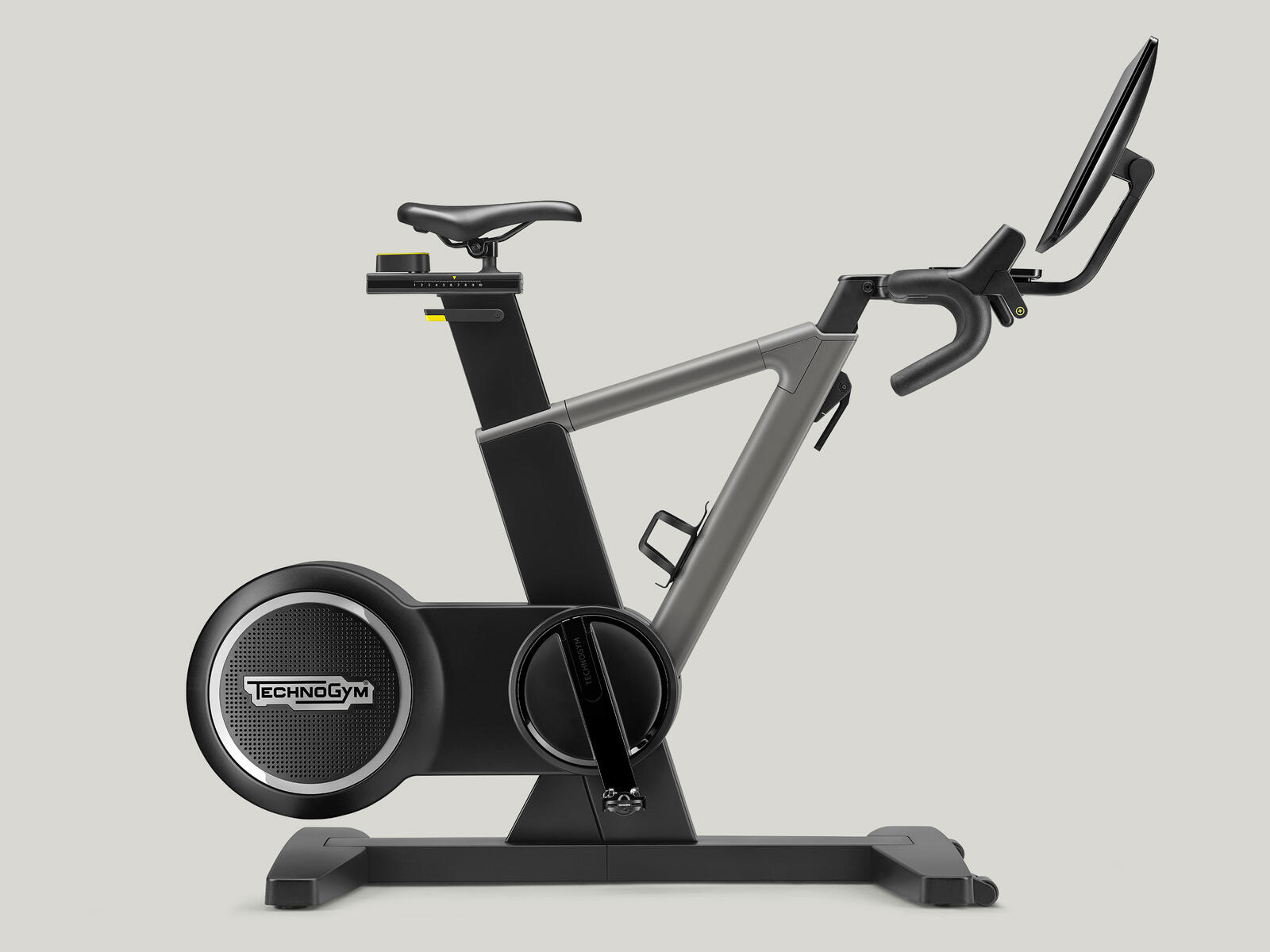
The commercial-gym company's home bike. A 22" screen is built in with single-login access to Zwift, Rouvy, Strava, TrainingPeaks, Netflix and Eurosport — the only high-end smart bike here that doesn't need a tablet strapped to it. Exceptional build.
The subscription is not required — the bike runs in a free guest mode with resistance, screen and metrics all working. Technogym Unlimited is $29/mo for their own content, family account covers five.
Two catches: in free mode the Bluetooth broadcast has to be manually re-enabled every session, which is a genuine daily annoyance. And it is the most expensive bike here by $500.
Keiser M3i — $2,985 Best fit for a 4'11" rider
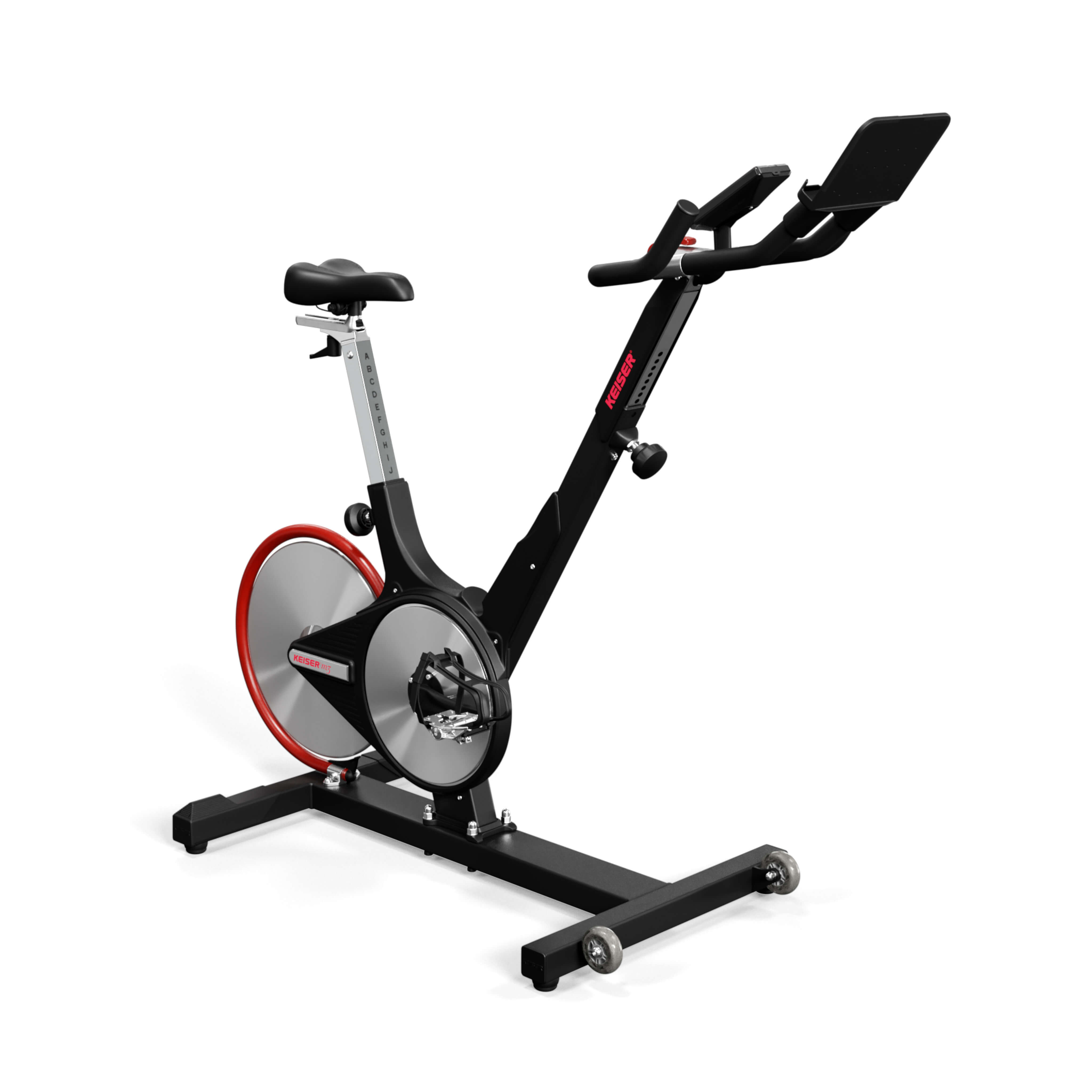
Given both your constraints, this is the bike. It fits riders from 4'10" to 7'0" — the widest range of any quality bike on the market, and the only premium option that comfortably clears your wife's height with room to spare. Built in the USA, magnetic resistance, belt drive, 350 lb capacity, rated 4.8/5 across ~1,700 reviews, and a reputation among studio operators for essentially never breaking.
No subscription of any kind. The console shows RPM, watts, calories, time and distance standalone; resistance is mechanical. It broadcasts over Bluetooth to Zwift, the Peloton app or nothing at all. Keiser's optional "The Ride" app is $6.99/mo.
Trade-off: bullhorn bars rather than drop bars, and no gradient simulation or ERG control. It is a studio bike, not a road-bike replica — which your relaxed criteria now allow.
Life Fitness IC7 — $4,367 New this revision
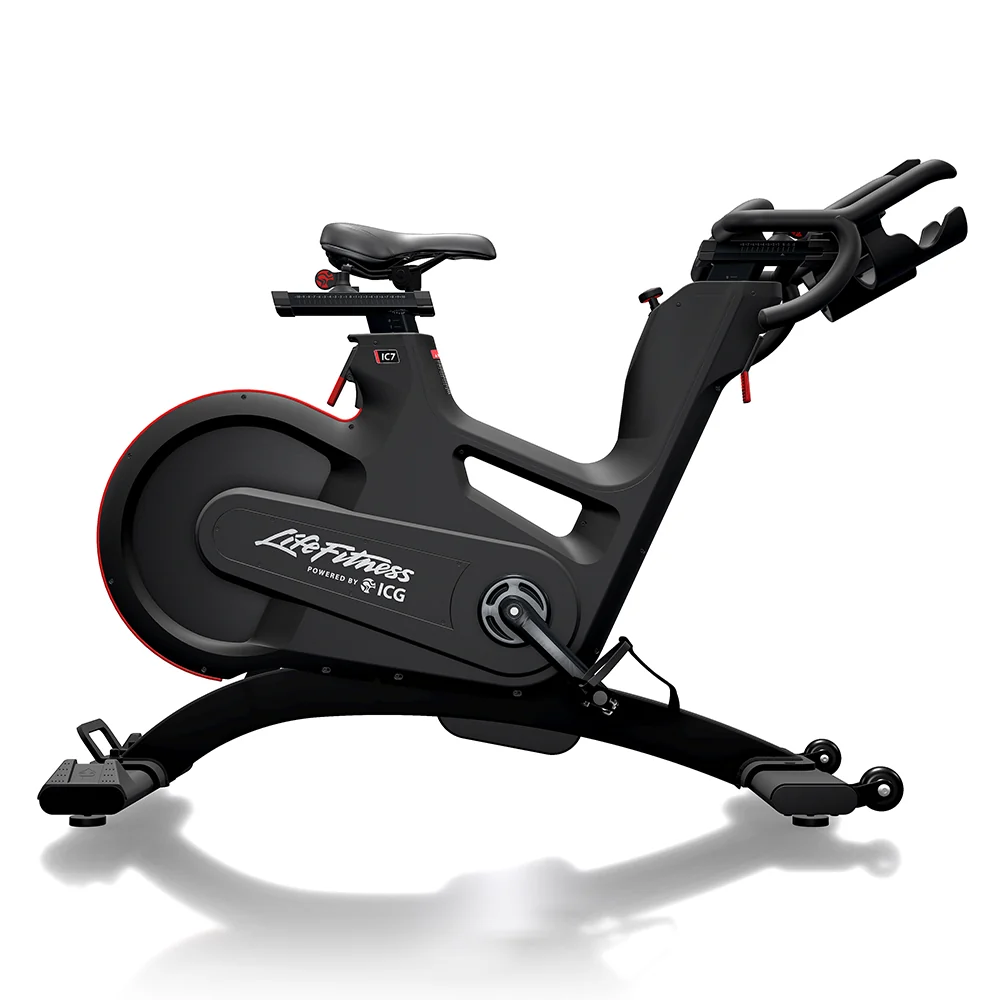
The commercial studio bike I missed last time. Life Fitness / ICG builds these for gyms, and the IC7 is the flagship: a 155 mm Q-factor — the pedal-to-pedal width — which is road-bike narrow and a real ergonomic advantage over typical wide-stance spin bikes. Magnetic resistance, WattRate power, full four-way adjustment (saddle height and fore/aft, bar height and fore/aft), 330 lb capacity.
No subscription required. The ICG app with instructor-led rides is optional.
Unknown: Life Fitness does not publish a rider height range. An owner review reports it fitting a 5'2" and a 6'2" rider on the same bike, but I could not verify it goes down to 4'11" — worth a direct call to them before buying. It is also the second-priciest bike here.
Wahoo Kickr Bike Shift — $2,549 Out of stock
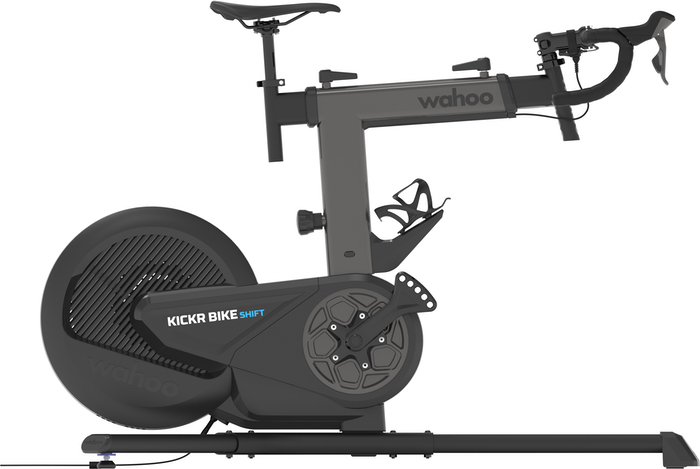
The Pro's cheaper sibling: same drop-bar shape, same real shifters with SRAM / Shimano / Campagnolo emulation and exact gearing replication, same fit platform. What you give up is the physical tilt and some power accuracy.
No subscription required, same as the Pro.
Buy carefully: it is currently out of stock on Wahoo's own site — still a live product, not discontinued, despite what some aggregator sites claim. And with the Pro discounted to $3,199, the Shift's $2,549 saves only $650 for meaningfully less bike. Worth waiting for restock only if that $650 matters.
Concept2 BikeErg — $1,100 Best value, fits short riders
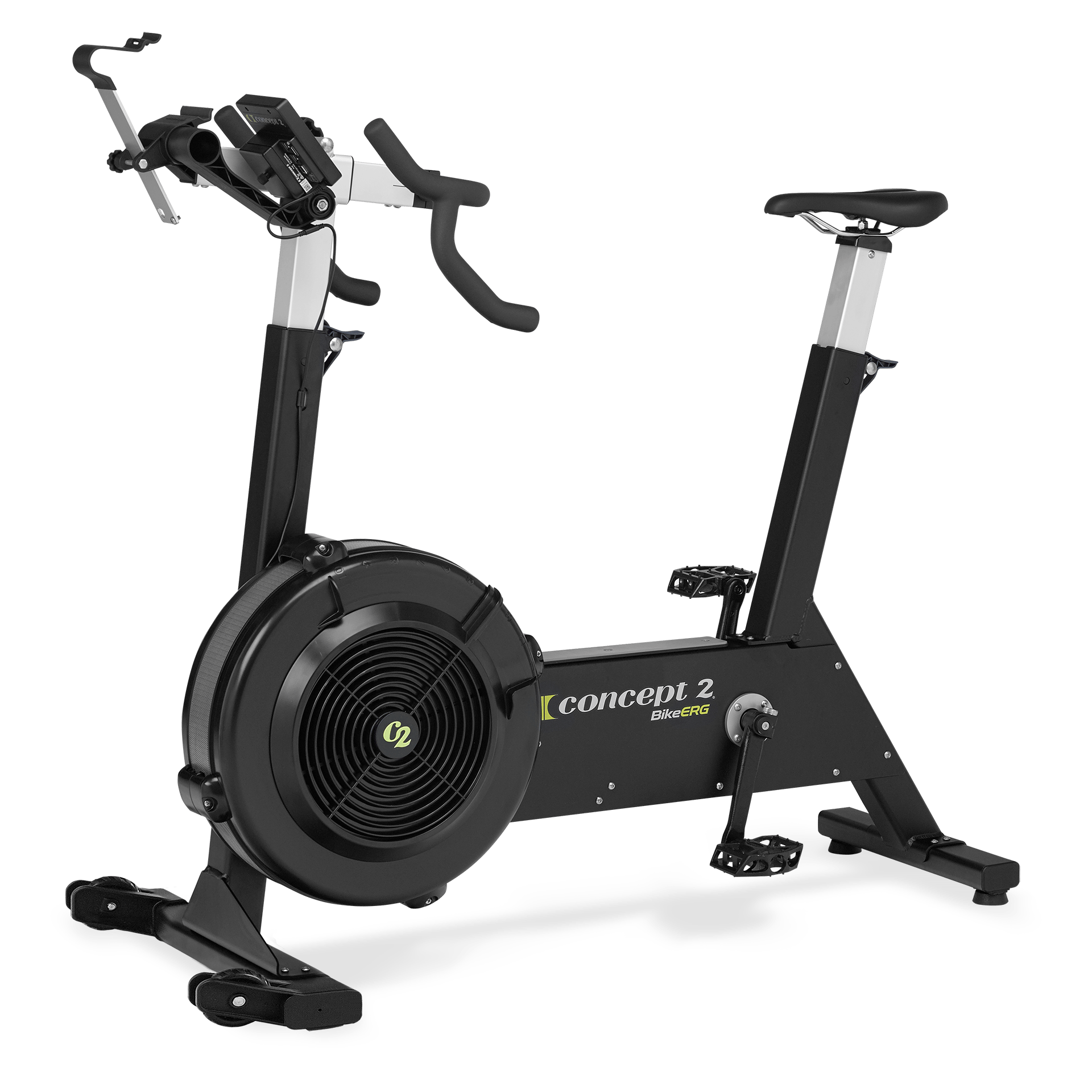
The other bike I missed, and it fits your criteria almost perfectly. Concept2 is the company whose rowing machine has been the world standard for thirty years, and the BikeErg is the same philosophy: air-resistance flywheel, a damper lever that works like gearing, the PM5 monitor, and essentially nothing that can become obsolete. Riders consistently rate the coasting and pedal feel as among the most authentic of any indoor bike. 350 lb capacity.
No subscription exists to buy. The PM5 works standalone; the ErgData app and online logbook are free.
Why it matters for your wife: Concept2 sells a low seat post option that drops the seat-to-pedal range to 28.75"–38" (standard is 30.75"–41"). Backing out the 170 mm cranks, that is an effective minimum saddle height of roughly 560 mm — comfortably below her likely 580–610 mm target, and the lowest of anything here. That last figure is my calculation from Concept2's published seat-to-pedal spec, not a manufacturer number — confirm when ordering.
Trade-off: air resistance is louder than magnetic, there is no ERG mode or gradient simulation, and it looks like gym equipment rather than a bike.
Zwift Ride — $999 through August 9 Subscription caveat
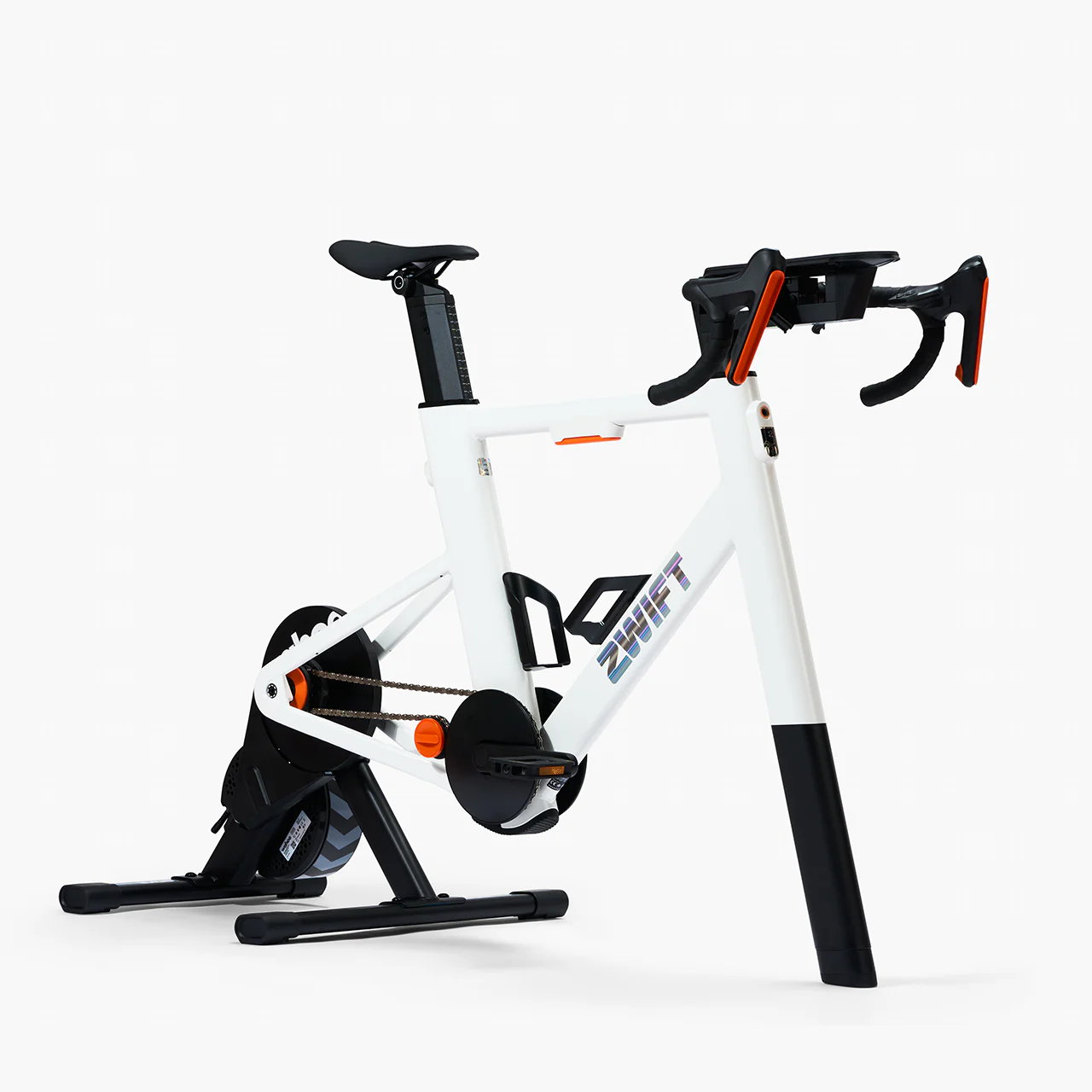
Demoted from #3 on your no-subscription rule. As hardware it is superb value: a complete standalone bike with real road geometry, real drop bars and hoods, the Kickr Core 2 included, and silent virtual shifting with a wider range than a physical cassette. $300 off through August 9.
But here is the catch that moved it. The underlying trainer broadcasts freely to any app, so the bike is not bricked — yet the shifters and steering only work in Zwift and Rouvy. Without the $19.99/mo subscription you own a frame whose defining feature is inert. Zwift has no family plan either — if both of you ride, that is $40/mo.
Context worth knowing: Zwift acquired Rouvy (and FulGaz through it) in April 2026, so which platforms support the shifters is a fast-moving situation. Zwift also raised the price from $14.99 to $19.99 in 2024.
Also against it for your household: cranks are fixed at 170 mm, long for a 4'11" rider, and the stated minimum is 5'0".
Schwinn IC4 — ~$999 Best budget, fits 4'6"
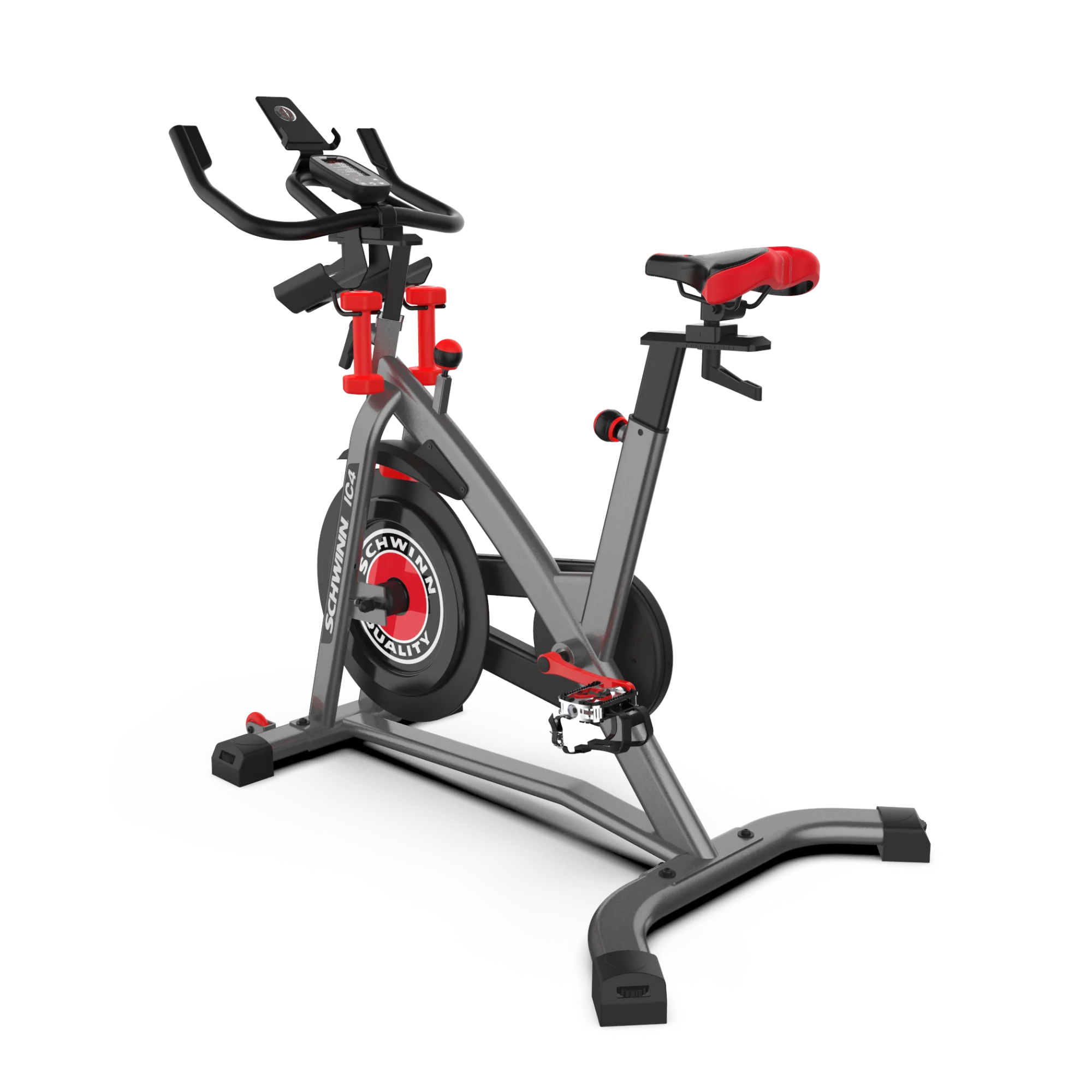
The same bike under two brands — buy whichever is cheaper. 100 magnetic resistance levels, belt drive, dual-sided pedals, backlit LCD console, 3 lb dumbbells, a 10-year frame warranty, and it fits riders from 4'6" to 6'6". Explicitly marketed for third-party apps: it pairs free over Bluetooth FTMS to Zwift, TrainerRoad and the Peloton app simultaneously.
No subscription needed at all — people buy this bike specifically to escape one.
Correction to what I told you earlier. I said power "reads ~10% high." That figure is not supported by any authoritative test, and the best independent data points the other way: a 2026 22-session comparison against Favero Assioma pedals found the IC4 reading roughly 4% low at 150–280 W, 9–12% low above 450 W, and up to 22% off in sprints. The honest statement is: power is estimated, not measured, and shows double-digit percentage error at high intensity — with the direction disputed. Fine for fitness and classes; not for structured power training.
Rider height — the 4'11" constraint
| Bike | Min rider height | Max | Min saddle height | Fits 4'11"? |
|---|---|---|---|---|
| Schwinn IC4 | 4'6" (54") | 6'6" (78") | not published | Yes |
| Concept2 BikeErg (low seat) | not published | — | ~560 mm equiv. | Yes — lowest here |
| Keiser M3i | 4'10" | 7'0" | not published | Yes — widest range |
| Life Fitness IC7 | not published | — | not published | Unverified — call them |
| Wahoo Kickr Bike Pro / Shift | 5'0" (152 cm) | 6'4" | not published | Below the floor |
| Wattbike Atom | 5'0" (152 cm) | 6'5" (198 cm) | not published | Below the floor |
| Zwift Ride | 5'0" (152 cm) | 6'6" (198 cm) | 599 mm | Below floor, but closest |
| Tacx Neo Bike Plus | not published | — | 640 mm | Too tall |
| Technogym Ride | not published | — | 640 mm | Too tall |
Measure her inseam — it decides this, not her height
"Minimum rider height" is a marketing rounding of one real number: how low the saddle drops, measured bottom bracket to saddle top.
- Inseam, barefoot, back to a wall, a book pulled up firmly between the legs — floor to top of book.
- Target saddle height ≈ inseam × 0.883.
- A typical 4'11" inseam is 26–27" (66–69 cm) → target roughly 580–610 mm.
Against that: the BikeErg with the low seat post lands near 560 mm and clears it easily. The Zwift Ride bottoms at 599 mm — inside the range despite its 5'0" rating, the one below-floor bike worth measuring for. The Tacx and Technogym bottom at 640 mm; no adjustment fixes that.
Crank length matters too. Long cranks force the knee too high at the top of the stroke. The Wahoo (165–175 mm) and Tacx (five lengths from 165 mm) adjust. The Zwift Ride is fixed at 170 mm — long for her.
Is a 5'0" minimum actually bad at 4'11"?
Short answer: one inch under is not a cliff — but it is not nothing either. The stated minimum is a conservative rounding of two things (how low the saddle drops, how short the reach gets). It is a fit-quality statement, not a safety limit, and manufacturers build margin into it. Nobody gets hurt from being an inch under.
But height is the wrong variable. Two people at 4'11" can differ by 2–3" in inseam, and that is what decides it:
- Inseam 27" or more → target saddle ≈ 600 mm. Most 5'0"-rated bikes will work.
- Inseam 26" or less → target ≈ 580 mm or lower. She will be at the bottom of every adjustment with nothing left in reserve.
Three things actually go wrong — in order of how much they matter
- Crank length — the underrated one. 170 mm cranks with a 26" inseam bring the knee very high at the top of the stroke and close the hip angle. This causes discomfort before saddle height does, and it is the most common reason short riders quietly stop using a bike. Wahoo offers 165 mm cranks; the Zwift Ride is fixed at 170 mm.
- Saddle will not drop far enough → hips rock side to side, toes point down, the knee never extends properly. Inefficient, and hard on the lower back and IT band over time.
- Reach too long → stretched to the bars, weight on the hands, neck strain. Frame length is not adjustable beyond saddle fore/aft and the stem.
Per bike, concretely
- Wahoo Kickr Bike Pro — the most adjustable bike here: five-point fit and 165 mm cranks available. Probably fine for her. Frustratingly, Wahoo does not publish a minimum saddle height.
- Zwift Ride — saddle bottoms at 599 mm, likely inside her range. But the fixed 170 mm cranks are the real dealbreaker, not the height rating.
- Wattbike Atom — 5'0" rated, minimum saddle height unpublished. Genuinely unknown; get that number before buying.
Are we missing anything? What I checked and ruled out
A second model swept roughly 30 candidate brands. These were considered and rejected, with the reason:
- Wattbike AtomX — real, $6,499, but hard to justify over the Atom at $2,799.
- SoulCycle At-Home — still sold, but $40/mo required. Fails your rule.
- Stryde Interactive — $895, no sub required, but a roughly two-person company; support risk.
- Elite Square — frame only, needs a separate trainer. Not standalone.
- JetBlack Victory — a trainer needing your own bike. Out of scope.
- Van Rysel / Decathlon — US only sells trainers, no standalone bike.
- Life Fitness IC8 — discontinued.
- Schwinn IC8 — UK only; US lineup is IC3/IC4.
- Sole SB700 — discontinued. SB900 — generic upright, no advantage over the IC4.
- Diamondback 1260Sc — discontinued.
- ProForm Studio Bike Pro — subscription-gated.
- Stages SB20 — discontinued April 2026.
- Tacx Neo Bike Smart / Kickr Bike v1 — superseded.
- CAROL Bike — a 5–10 minute AI sprint device, not sustained riding.
- MYX / BODi — hardware unavailable.
- Freebeat, Aviron, Renpho, Sunny, Yesoul — budget or gamified uprights.
- Assault AirBike / Rogue Echo — CrossFit fan bikes, not cycling.
- Hydrow, Ergatta, Vingo, Magene — no bike product exists.
NordicTrack bikes — the same question, answered consistently
You asked whether the NordicTrack finding applies to bikes as well as treadmills. It does — and an earlier version of this page was inconsistent by excluding the bikes without saying why. NordicTrack's own iFIT FAQ names them directly:
"You can always use your treadmill, elliptical, bike, fusion or rower in manual mode."
So the S22i, S24 and X24 are not bricks without iFIT, and the reasoning for leaving them out of the top 10 is the same as for the treadmills: you would be paying for a large touchscreen whose entire purpose is the subscription. Not a defect — just poor value if you never intend to subscribe.
What NordicTrack does not publish: whether resistance and incline stay adjustable in manual mode on the bikes specifically, or what the console shows. The FAQ covers manual mode generally and never breaks it down per machine. If you seriously consider one, that is a question for their support line — do not assume it matches the treadmill behaviour.
What is actually true about NordicTrack bike sizing
NordicTrack publishes no rider-height spec at all — not for the X24, the S24, or the S22i. That was confirmed by inspecting the live rendered product pages and reading three official owner's manuals cover to cover: no rider-height, saddle-height or crank-length figure appears in any of them.
The only rigorous numbers come from OutdoorGearLab, who measured the X24 and S22i themselves using the same method, so they are directly comparable:
| Model | Min saddle-to-pedal | Max | Crank | Provenance |
|---|---|---|---|---|
| S22i (discontinued) | 28 in | 41 in | not specified anywhere | Third-party, measured |
| X24 (current) | 29.5 in | 43 in | 170 mm | Third-party, measured |
| S24 (current) | never measured by anyone | — | not found | No data at all |
So the newer bike does sit higher at the bottom of its range — but the real gap is 1.5 inches, not a cliff. No source establishes a hard "cannot fit" cutoff at either figure.
The number that actually circulates for the S22i is 4'10"–6'10", attributed to NordicTrack by two review sites but not independently confirmable — no archived capture of NordicTrack's own page exists to prove they ever published it. Reviewers who actually tested it put the realistic range nearer 5'0"–6'6".
This is also the strongest argument yet for the Keiser M3i: its 4'10"–7'0" range is a published manufacturer figure, not a measured inference or a number of unknown origin.
The three I couldn't confirm last time — now verified
Stages SC3 — from $3,580 Real power meter, no subscription
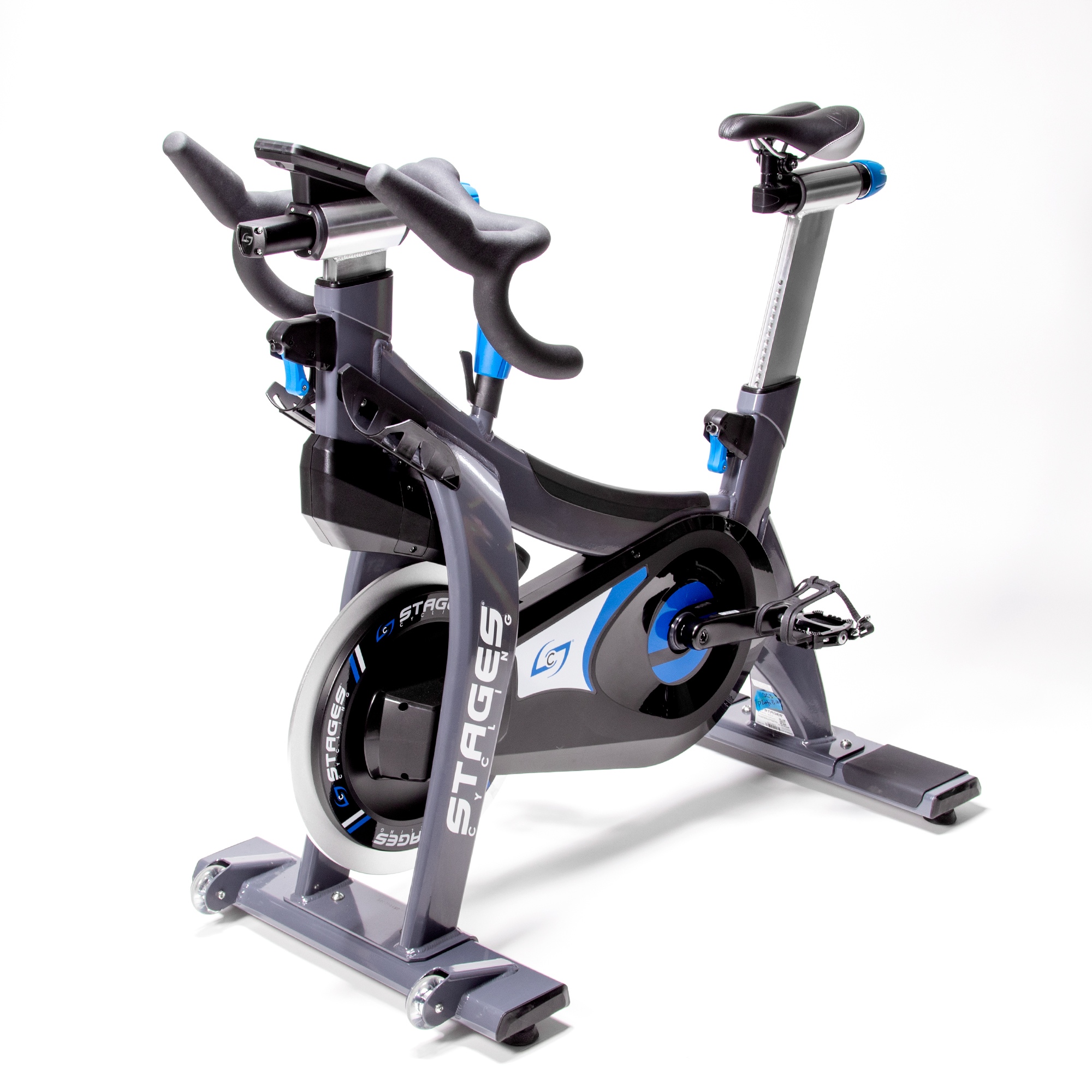
Stages makes the power meter that shows up on professional road bikes, and the SC3 puts that same technology on a studio frame — aluminum construction, CarbonGlyde belt drive, a magnetic braking system, FitLoc tool-free adjustment, and a self-powered EcoSCRN display that needs no outlet.
No subscription — it is a commercial studio bike sold for both gyms and individual home purchase, with no app or content tier gating any function.
Would have been strongly competitive with the Wahoo Kickr Bike Shift (#7, currently out of stock) at a similar price point, if you want a genuine alternative while the Wahoo is unavailable.
Schwinn AC Performance Plus — ~$3,299 (MSRP $4,049) Commercial belt drive
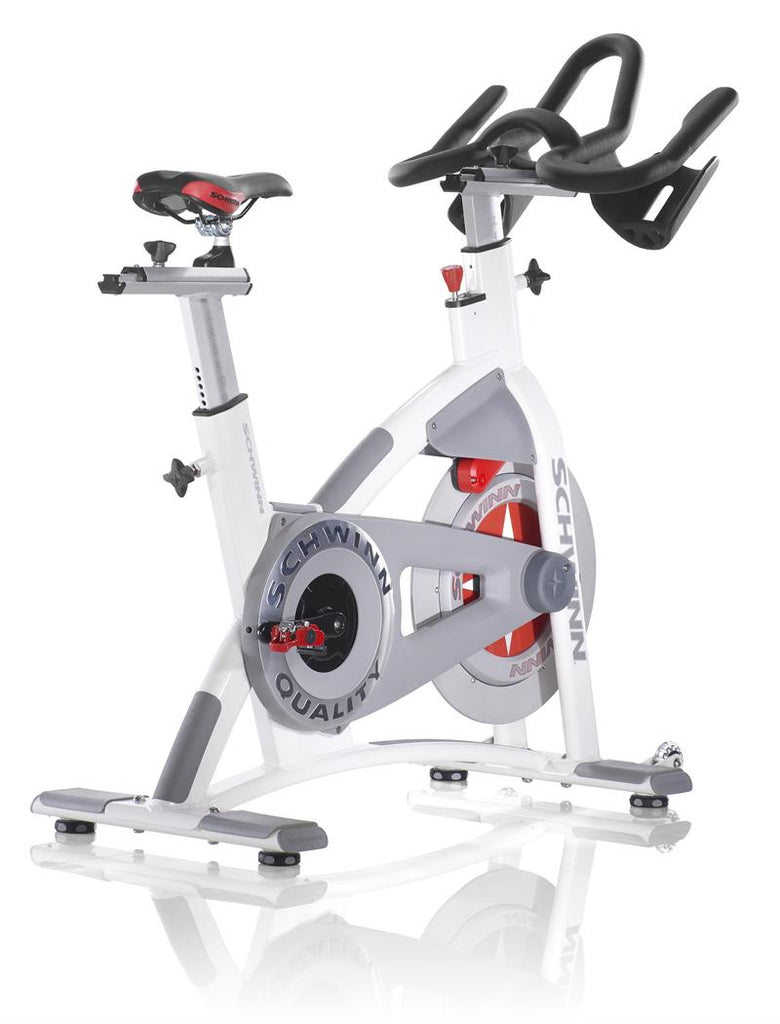
Not to be confused with the budget IC4 at #10 — this is Schwinn's commercial studio line, the bike actual cycling studios buy. Micro-adjustable seat and handlebars, a wider step-through frame, carbon belt drive, rust-free aluminum construction.
No subscription — no console content tier to gate; it is resistance and a basic display, nothing more.
At $3,299 street it sits between the Keiser M3i and the Wahoo Shift. Rider height range isn't published — worth asking the dealer directly given your constraint.
Spinning Aero Connected — price on request NYT Wirecutter pick
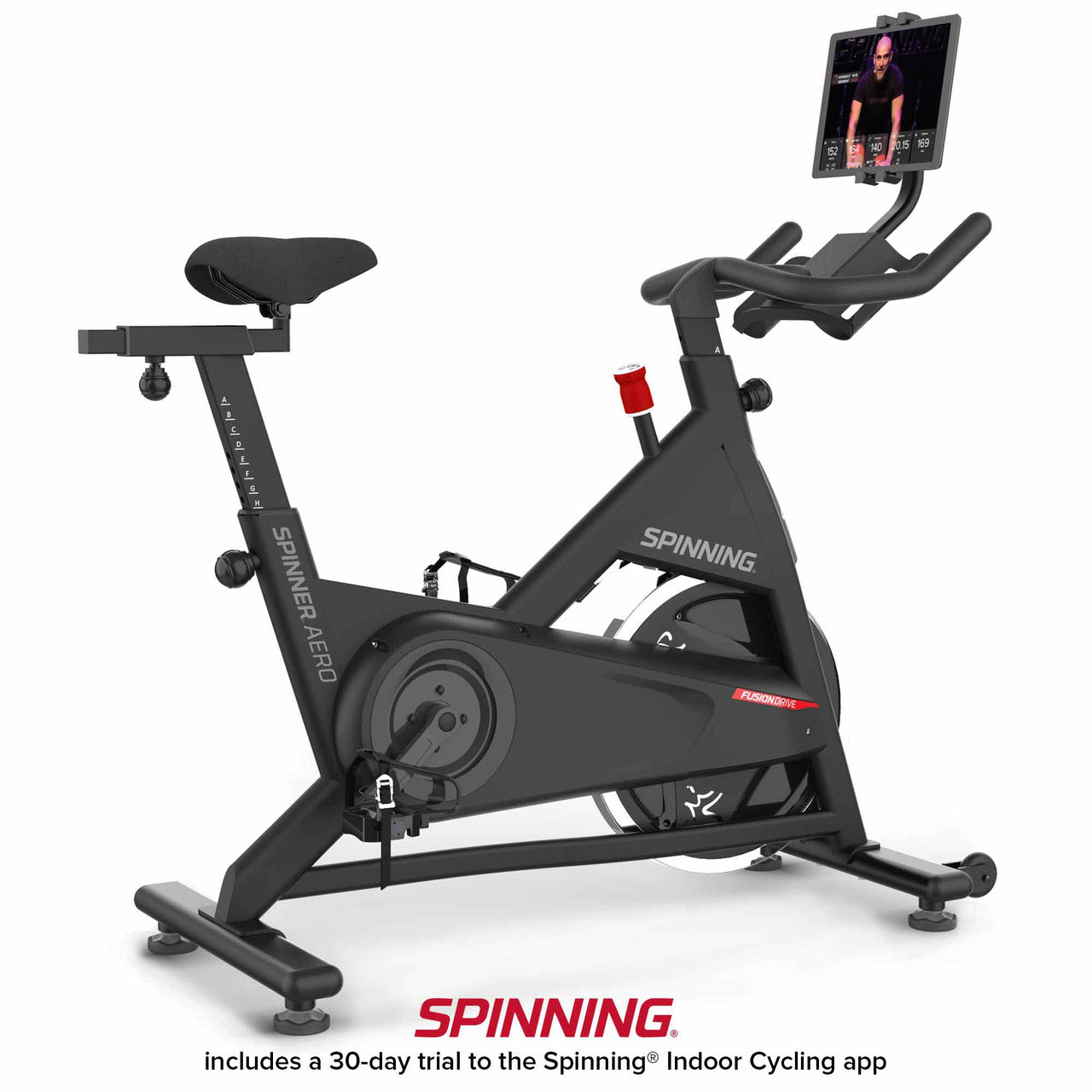
The original Spinning brand (Mad Dogg Athletics) still sells a full home lineup: Pace ($399) up through Blade ION Power ($2,095), with Aero Connected and Edge Connected as the standouts. Aero was a Wirecutter top pick — friction resistance means it needs no outlet, a genuine advantage over magnetic bikes.
No subscription required to ride. "Connected" means Bluetooth sensors (cadence, heart rate) that broadcast free to the Spinning app or any third-party app — there's no built-in screen to gate. The bundled Connect Kit includes a 30-day free trial of the Spinning app; after that it's optional, same pattern as Wahoo SYSTM and Tacx Premium.
Belongs on the radar especially as a lower-cost alternative to Keiser if the M3i's price is a stretch — the Edge Connected starts at $799.
Verdict
| If you want | Buy | Where |
|---|---|---|
| Fits your wife + zero subscription + buy-once quality | Keiser M3i — $2,985 | keiser.com |
| Same philosophy, a third of the price | Concept2 BikeErg — $1,100 (add the low seat post) | concept2.com |
| Lowest cost that still fits her | Schwinn IC4 — ~$999 | schwinnfitness.com |
| Most realistic road ride (if height weren't a factor) | Wahoo Kickr Bike Pro — $3,199 on sale | wahoofitness.com |
| Best free software with the bike | Wattbike Atom — $2,799 | us.wattbike.com |
Where to actually buy them
| Bike | Where to buy | Price seen | Notes |
|---|---|---|---|
| Keiser M3i the pick |
keiser.com (direct) FitnessZone · 360 Fitness · GymStore |
$2,985 direct one dealer listed $1,495 |
Dealer spread is enormous. Call before paying list — but confirm any cheap listing is a current M3i and not pre-owned or an older M3. |
| Concept2 BikeErg | concept2.com — direct only | ~$1,100 | No dealer network, no discounting. Add the low seat post if a shorter rider will use it. |
| NordicTrack S22i discontinued |
Costco · Best Buy · Target · Amazon 3rd-party · 360 Fitness · eBay | ~$1,689 new ~$1,189 used |
Costco carries the best closeout warranty (10-yr frame / 2-yr parts / 1-yr labor). Stock is finite. |
| Schwinn IC4 budget |
schwinnfitness.com · Amazon · Dick's · Best Buy | ~$999 | Sold as the Bowflex C6 too — same bike, so buy whichever is cheaper if you don't mind the badge. |
| Wahoo Kickr Bike Pro | wahoofitness.com · certified reconditioned | $3,199 on sale MSRP $3,999 |
Reconditioned units run several hundred less with the same warranty posture. |
| Sole F80 treadmill pick |
soletreadmills.com — note the domain | $1,599 | soletreadmills.com, not solefitness.com — the latter is a different site. |
| Horizon 7.0 AT treadmill value |
horizonfitness.com · Amazon · Best Buy | $1,099 was $2,100 |
Amazon often undercuts Horizon direct; compare both. |
Part 2 — Treadmills: top 10, no required subscription
What "requires a subscription" actually means — I was too blunt
You asked whether I left the subscription machines out because they brick without one. Mostly no — and my earlier wording oversold it. Here is what actually happens, from each vendor's own support pages:
| Brand | Still walks without a sub? | What you actually lose | Sub cost | Verdict |
|---|---|---|---|---|
| NordicTrack / ProForm iFIT |
Yes — full manual mode | Speed, incline, time, distance, calories and heart rate all still work, and no internet is needed. You lose the coach-led iFIT library and auto trainer control. A few built-in workouts remain. | iFIT $39/mo Pro ($180/yr individual) |
Degrades, still usable |
| Peloton Tread | Yes — "Just Run" / "Just Walk" | Peloton's own no-membership page names walking. Speed and incline are physical knobs. Live metrics display but nothing saves to your profile. You lose all classes, Auto-Incline, history and every entertainment app. | $49.99/mo no annual option |
Usable, but see traps |
| Echelon Stride | Yes, but limited | Runs manually; Echelon describes functionality as "limited" without the app. Echelon's bikes also bind the serial to the original owner's account, which guts resale — assume the same posture. | $39.99/mo ($399.99/yr) |
Works, poor value |
The top 10
| # | Treadmill | Price | Owner reviews | TV / screen | Best for |
|---|---|---|---|---|---|
| 1 | 3G Cardio Elite Runner X 3gcardio.com | $4,250 was $4,699 | Boutique brand, few public reviews — expert-reviewed well | No screen bring your own tablet | Buy-for-life, lifetime motor + frame |
| 2 | Sole F85 soletreadmills.com | $2,199 | Well reviewed; count not published on Sole's page | 15.6" built-in Netflix + YouTube, no equipment sub | Biggest screen without a subscription |
| 3 | Horizon 7.8 AT horizonfitness.com | $1,999 was $2,699 | Strong across the AT line | No smart screen tablet holder + BT speakers | Best serious treadmill under $2k |
| 4 | Horizon 7.4 AT horizonfitness.com | $1,799 was $2,399 | Strong across the AT line | No smart screen tablet holder, USB charge | Same platform, less money |
| 5 | Sole F80 soletreadmills.com | $1,599 | 4.0/5 — but only 7 reviews, too thin to lean on | 10.1" built-in Netflix, YouTube, Prime, Disney+, Hulu | Best all-round buy |
| 6 | Sole F65 soletreadmills.com | $1,399 | 3.9/5 from 39 reviews | Built-in streaming apps | 22" wide deck, 3.25 CHP |
| 7 | LifeSpan TR5500iM lifespanfitness.com | $2,799 sold out | Long-standing walking brand | Console only no streaming | Folding, walking-first design |
| 8 | Sole F63 soletreadmills.com | ~$1,199 | 4.3/5 from 417 reviews — best-evidenced here | Small LCD tablet holder | Entry Sole, lifetime frame + motor |
| 9 | Horizon 7.0 AT horizonfitness.com | $1,099 was $2,100 | 4.2/5 from 1,190 (Horizon) 4.5/5 from ~950 (Amazon) | 7.25" LCD tablet holder + BT speakers | Best value for walking |
| 10 | AssaultRunner Pro assaultfitness.com | $3,499 was $2,999 in 2024 | Well regarded, niche audience | Small console no screen | Curved manual — no motor at all |
3G Cardio Elite Runner X — $4,250 Buy for life
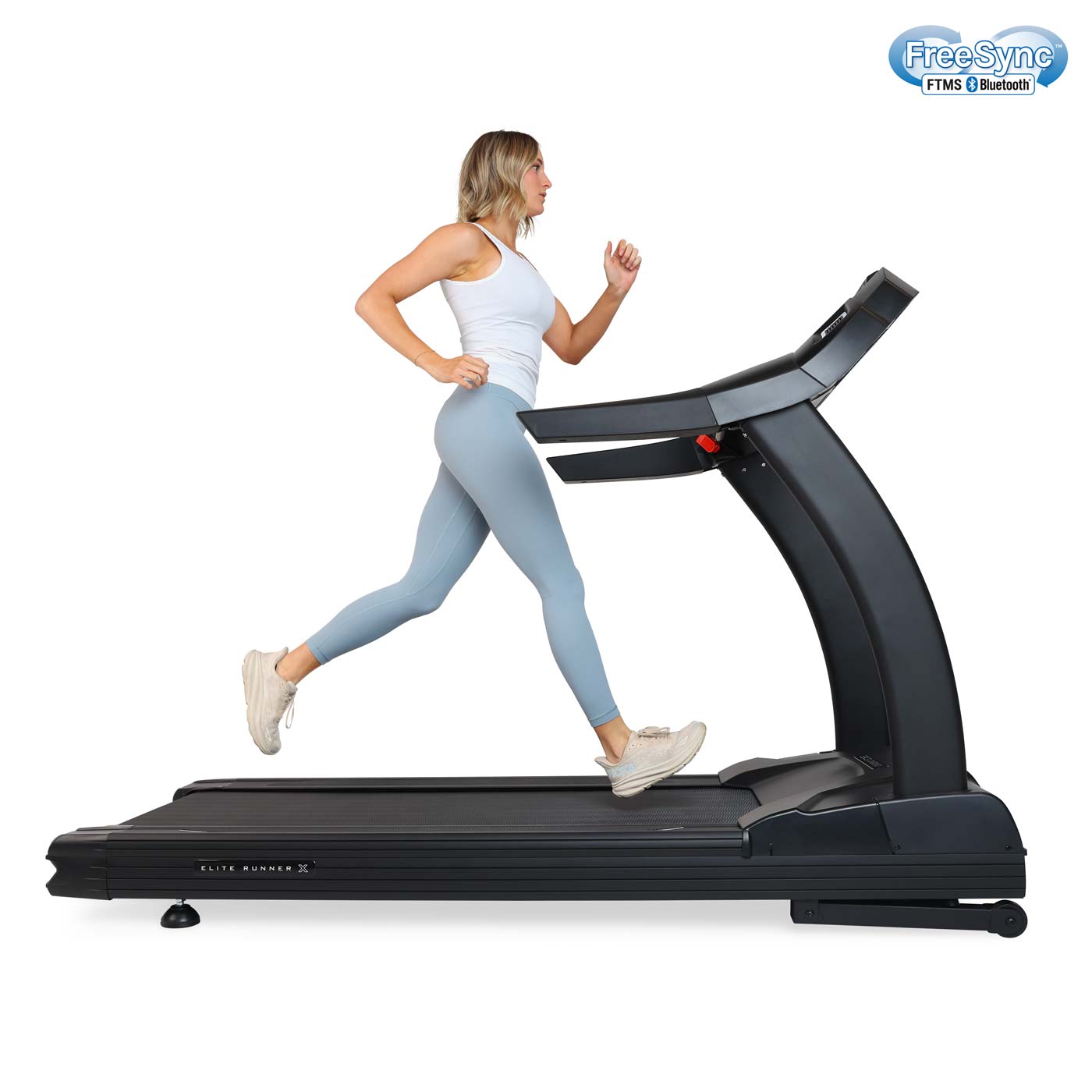
The treadmill answer to the Keiser M3i. A 4.0 HP club-rated motor with a lifetime warranty on both motor and frame, 10 years on parts and 2 years in-home labor, a 22" × 62" belt and an orthopedic cushioning system. Currently $4,250, down from $4,699.
No subscription, and the company markets against them explicitly — their own line is "don't get handcuffed by your exercise equipment." Built-in programs work standalone, and FreeSync FTMS Bluetooth lets you pair any app you like on your own screen.
The catch is simply price — it is more than double the Sole F80 and far more treadmill than a walker needs. Buy it if you want one machine for the next twenty years.
Sole F80 — $1,599 The classic no-subscription brand
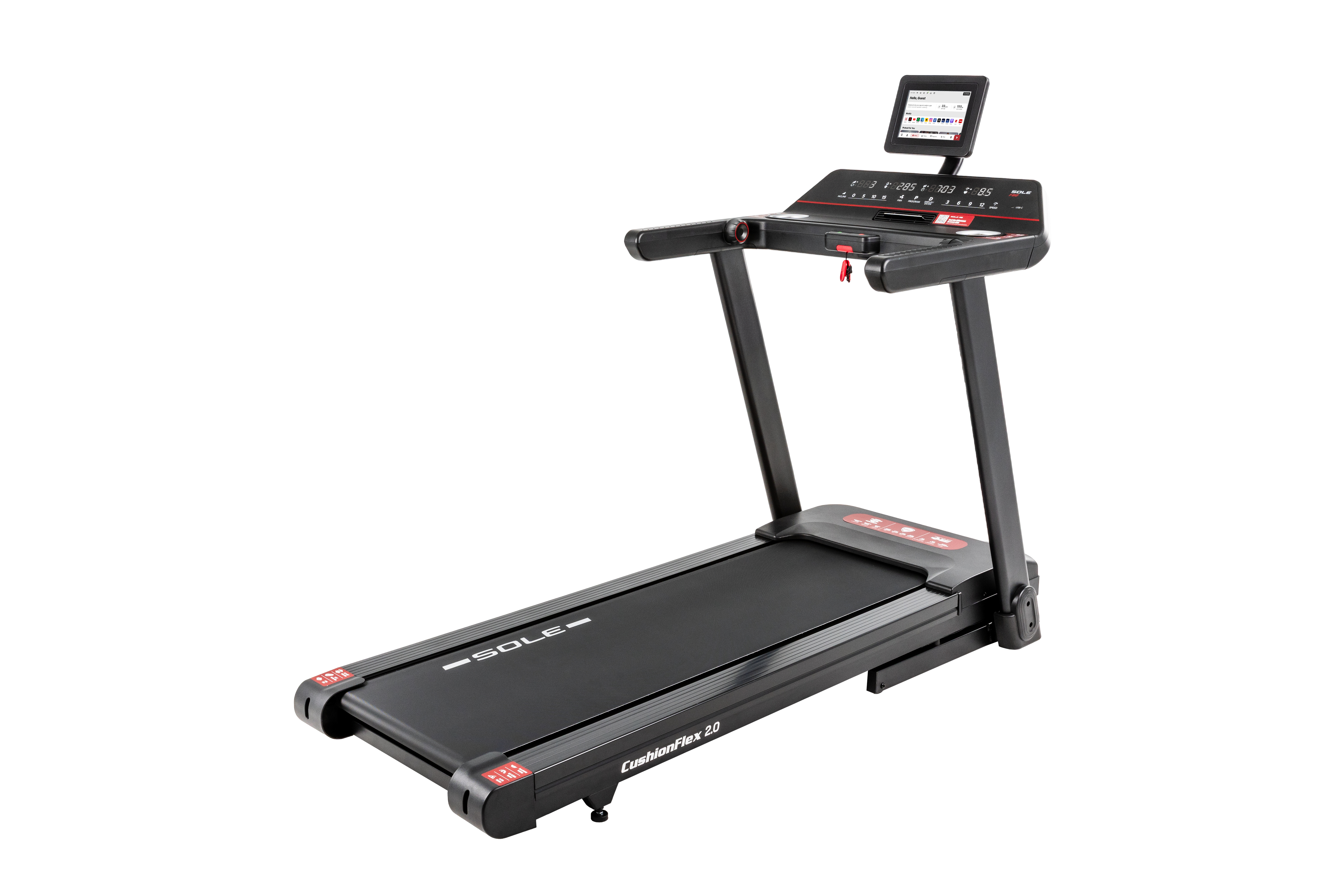
Verified this pass — the earlier estimate was wrong because the correct domain is soletreadmills.com, not solefitness.com, which is a different site that kept refusing the connection. A 3.25 HP brushless motor, 20" × 60" deck with CushionFlex 2.0 cushioning, 0–15 power-adjustable incline levels, and lifetime coverage on frame and motor, 3 years on deck and electronics.
No subscription required — Sole's own line is a "free SOLE+ app" with no monthly fee needed for operation.
The F85 is $2,199 and steps up the motor and display if you want more headroom; the F80 is the sweet spot for a walker.
What actually matters if you are mostly walking
Treadmill specs are written for runners, and most of what they push does not matter to a walker. What does:
- Incline beats speed. This is the big one. For a walker, incline is how you get intensity — 10–15% is standard and does more for you than any speed spec. Don't pay for a 12 mph top end you will never use.
- Motor: 2.25–2.5 CHP is plenty for walking. 3.0+ CHP only matters if someone runs on it. Look for continuous horsepower (CHP), not peak HP — peak is a marketing number.
- Deck length: 55" is fine for walking. 60"+ is a running requirement, and it costs you floor space. A shorter deck is a feature, not a compromise, if nobody runs.
- Cushioning matters less at walking speed than the marketing implies, but long side rails and a stable frame matter more — that is what makes it feel safe.
- Folding and footprint will affect whether it actually gets used more than any performance number. Be honest about where it will live.
- Noise — walking pads and belt-drive treadmills are quiet enough to use during a call. Worth checking if it goes in a shared space.
Beyond the top 10 — premium and curved-manual options, now verified
These didn't displace anything in the top 10 — mostly on price — but all are real, current, and subscription-free.
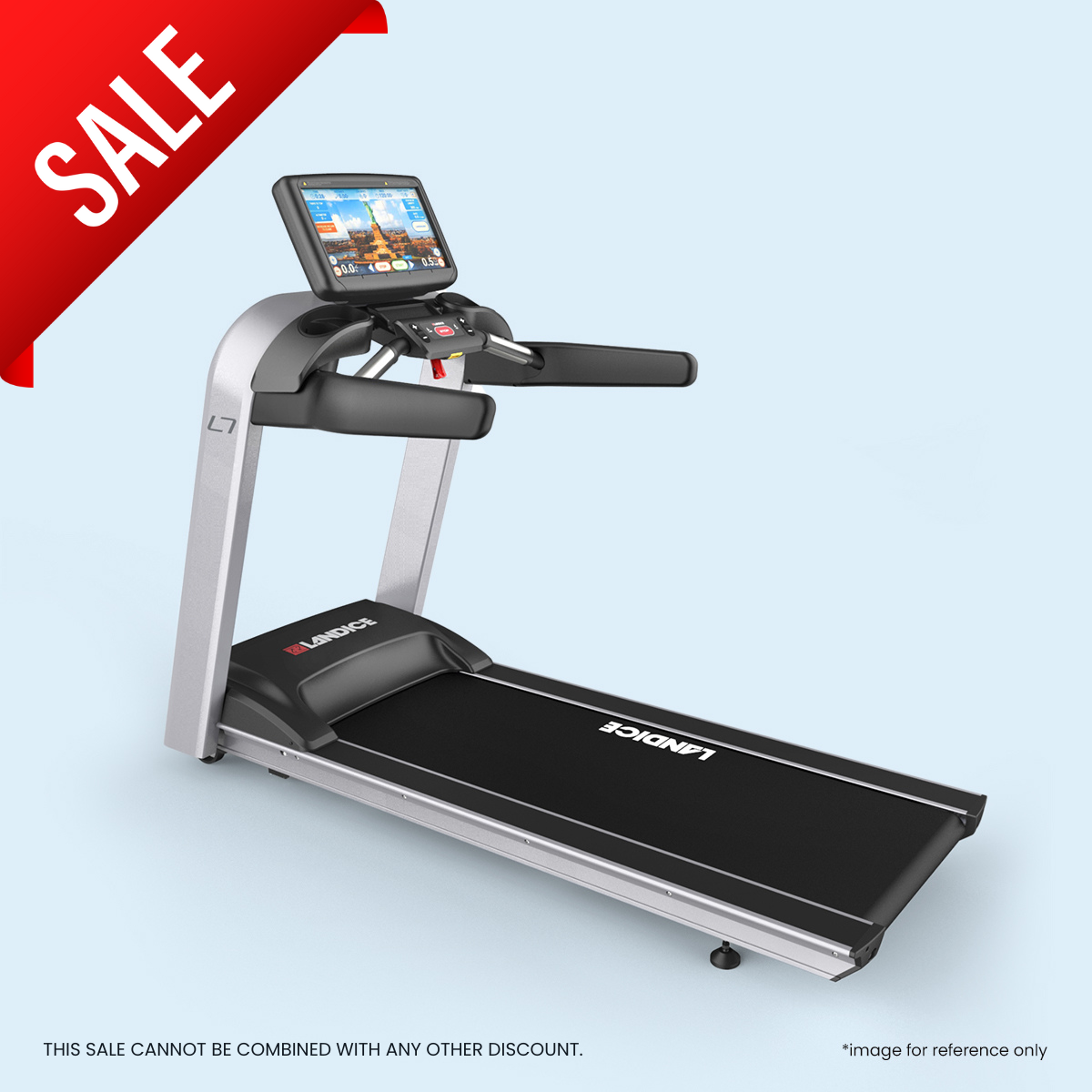
Landice L7 — from $5,429. The domestic commercial-grade option; Landice builds in New Jersey and is a fixture in physical-therapy clinics for its ride quality. 42 built-in programs, and no subscription — "the console does not include smart devices and subscriptions," full stop. Buy it for the build quality, not the price.
TrueForm Runner — from $5,995 (Enduro, no display) up to $9,495 for a TrueTouch display model. Hand-built in the USA, widely considered the gold standard curved manual treadmill: no motor, you drive the belt, which is a genuinely different training stimulus than a motorized deck. No subscription — it's non-motorized and non-networked by design; the optional TrueTouch display adds Netflix and Zwift as extras, not requirements.
AssaultRunner Pro — $3,499 (up from $2,999 in 2024). The AssaultRunner is the same curved-manual idea at roughly a third of TrueForm's price — a real trade for most home users, though reviewers note it's a less refined ride than the TrueForm. No subscription.
Woodway — the treadmill equivalent of Life Fitness/Keiser at gym scale: the Curve Trainer starts around $4,999 and the motorized Path/Mercury line runs $9,000–$20,000+. No subscription on any of it, but this is genuinely commercial-grade pricing for a home gym — mentioned for completeness, not a realistic pick here.
Precor — largely a used/refurbished proposition now; pre-owned units (TRM 835/885/781) run $2,995–$4,995 through fitness-equipment resellers rather than as a current new consumer line. Worth knowing it exists if you're comfortable buying refurbished commercial gear, but not a new-purchase recommendation.
Sources
- Wahoo — Kickr Bike Pro · SYSTM 2025 price increase
- Garmin — Tacx NEO Bike Plus · DC Rainmaker in-depth review
- Wattbike US — Atom · Garage Gym Reviews
- Technogym — Ride · DC Rainmaker review
- Keiser — M3i · Garage Gym Reviews
- Life Fitness — IC7 Indoor Cycle
- Wahoo — Kickr Bike Shift
- Concept2 — BikeErg
- Zwift — Ride with Kickr Core 2 · Zwift pricing · Zwift acquires Rouvy + FulGaz
- Schwinn — IC4 · 2026 power-accuracy test vs Favero Assioma
- Treadmills: 3G Cardio Elite Runner X · Horizon Fitness treadmills · BowFlex treadmills · LifeSpan treadmills · WalkingPad · Sole F80 · Landice L7 · TrueForm Runner
- Additional bikes: Stages SC3 · Schwinn AC Performance Plus · Spinning Aero Connected
- Cyclingnews — Best smart bikes 2026 · Cycling Weekly group test · Velo — Kickr Bike Pro review